The Honor Tiles: Winds & Dragons
The tiles that don’t run in sequences and why they’re worth protecting
If you’ve been following along, you already know your three suits: Bamboo, Characters, and Circles. Those 108 tiles are the backbone of every hand. But Mahjong has another category entirely: Honor tiles. These don’t form sequences. They don’t run from 1 to 9. And in Hong Kong Style, they can quietly become your biggest source of bonus points.
There are two types: Winds and Dragons. Their scoring importance occurs when it is your own seat wind or when it is the prevailing wind. Let’s go through both.
WHAT IS THE SEAT WIND?
Your seat wind is your personal wind position at the table for that round. Each player is assigned one of the four winds: East, South, West, or North. If you are sitting in the East position, East is your seat wind. If you are sitting West, then West is your seat wind.
In Hong Kong Style Mahjong, collecting a Pung or Kong of your own seat wind earns bonus points/faan. For example, if you are seated as South and collect three South Wind tiles, that set scores because South is your personal wind.
WHAT IS THE PREVAILING WIND?
Beyond your individual seat wind, there is also a Prevailing Wind, ie. the wind of the current round. In Round 1, East prevails. In Round 2, South. A complete game runs through all four wind rounds: East, South, West North (ESWN).
Any player who collects a Pung of the prevailing wind tiles earns bonus points, regardless of their own seat position. So if East is prevailing wind and you collect three East Wind tiles, you score, even if you’re personally sitting South, West or North.
This means a single wind tile can sometimes have double importance. If you are seated East during the East Round, then East is both your seat wind and the prevailing wind — making an East Wind set particularly valuable.
The Wind Tiles
There are four Wind tiles. One for each direction. In a full set, you’ll have four copies of each, for a total of 16 Wind tiles.
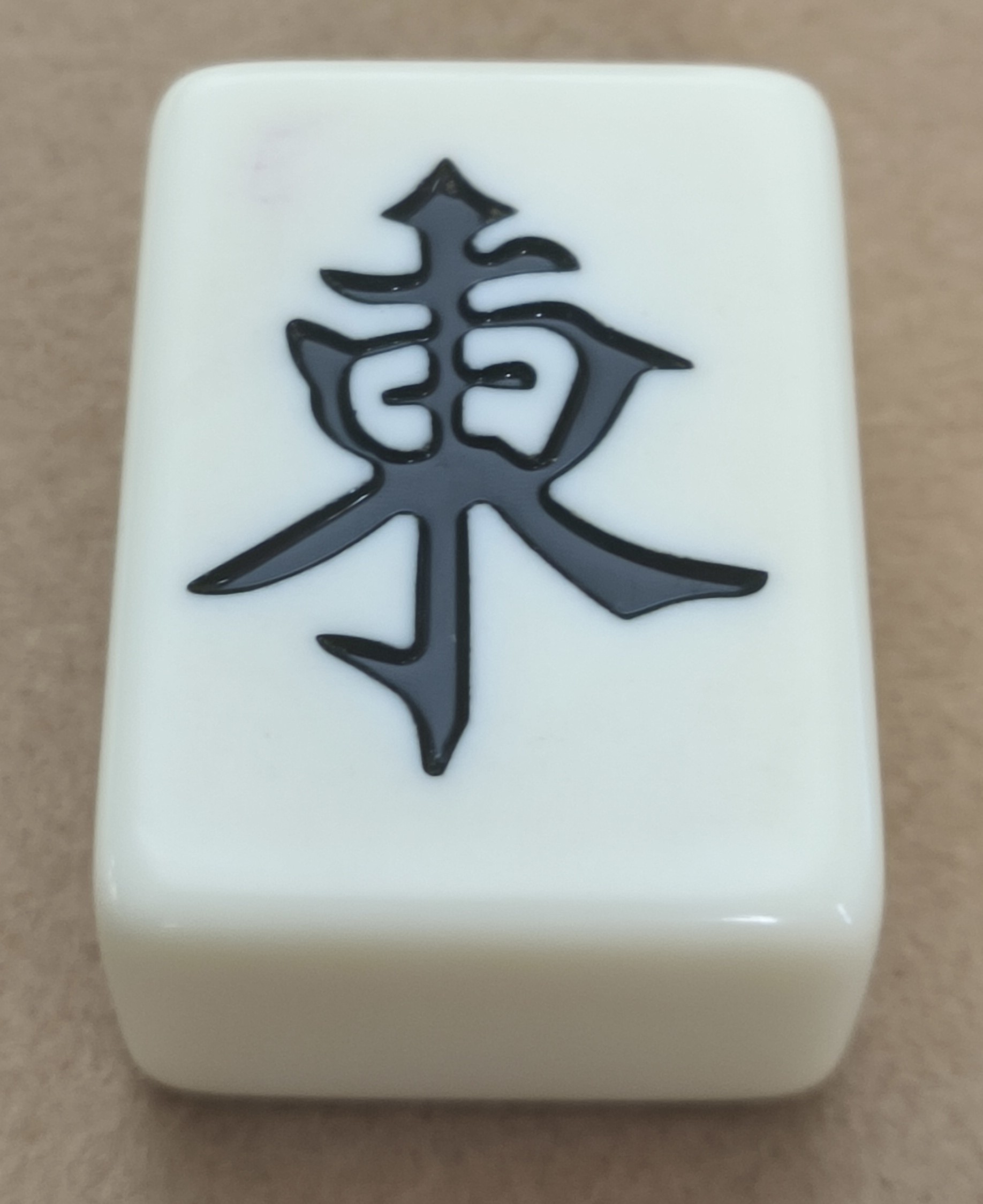
🀀 East Wind
East is the dealer’s wind. The game always begins with the East player, who also receives 14 tiles instead of 13. East is the most valuable seat wind in Hong Kong Style. If you’re East and you win, the payout is doubled.
BONUS: Scoring if it is your seat wind or the prevailing wind
RECOGNITION: Look for an sideward “E” on the tile
NOTE: East Wind tiles in your hand score bonus points if you’re sitting in the East seat.
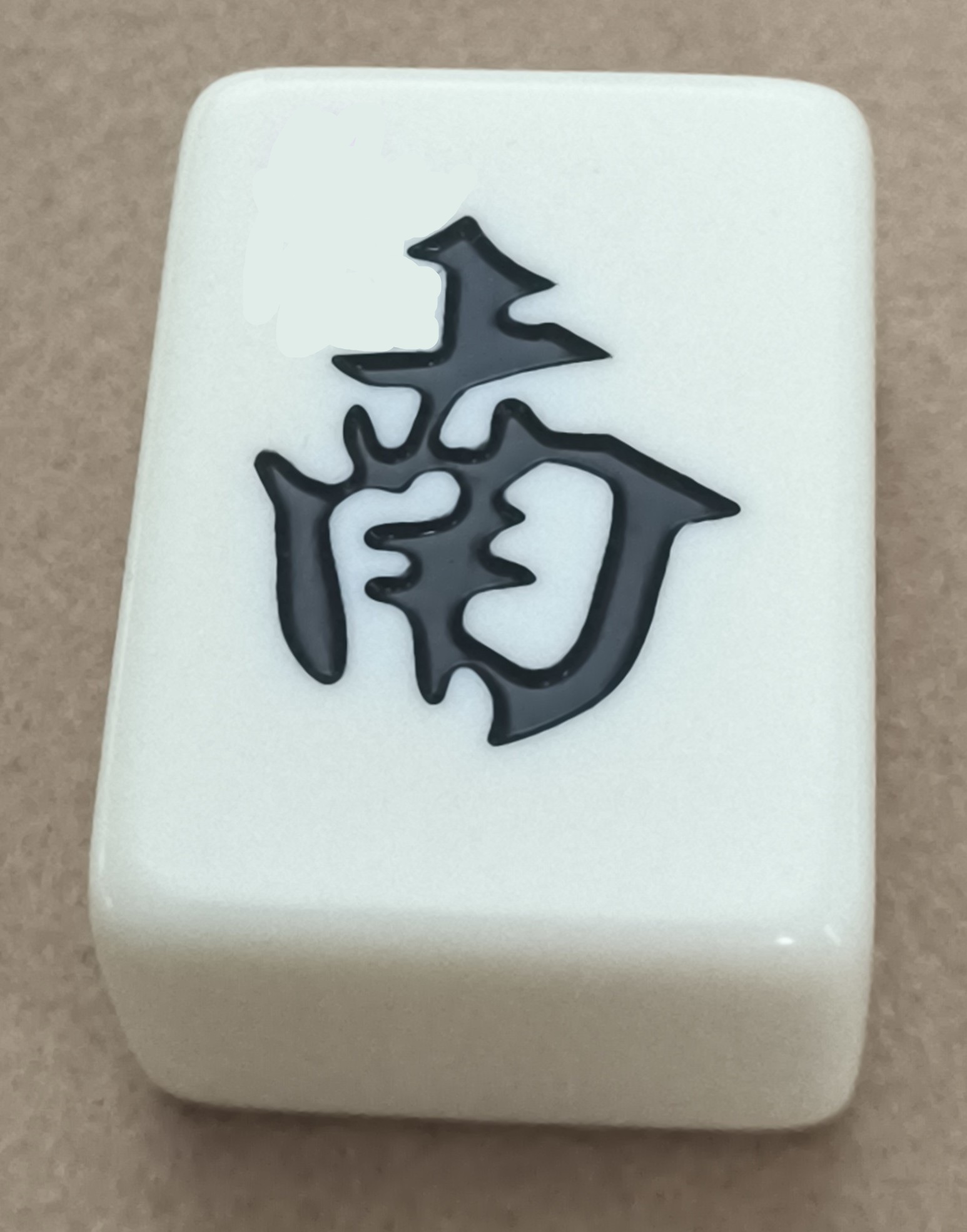
🀁 South Wind
South sits to the right of East at the table. After each hand, seat winds rotate, so every player will eventually cycle through all four positions over a full game.
BONUS: Scoring if it is your seat wind or the prevailing wind
RECOGNITION: Image has a has a curve that looks like a large stomach. S for stomach or South. Try to imagine it 🙂
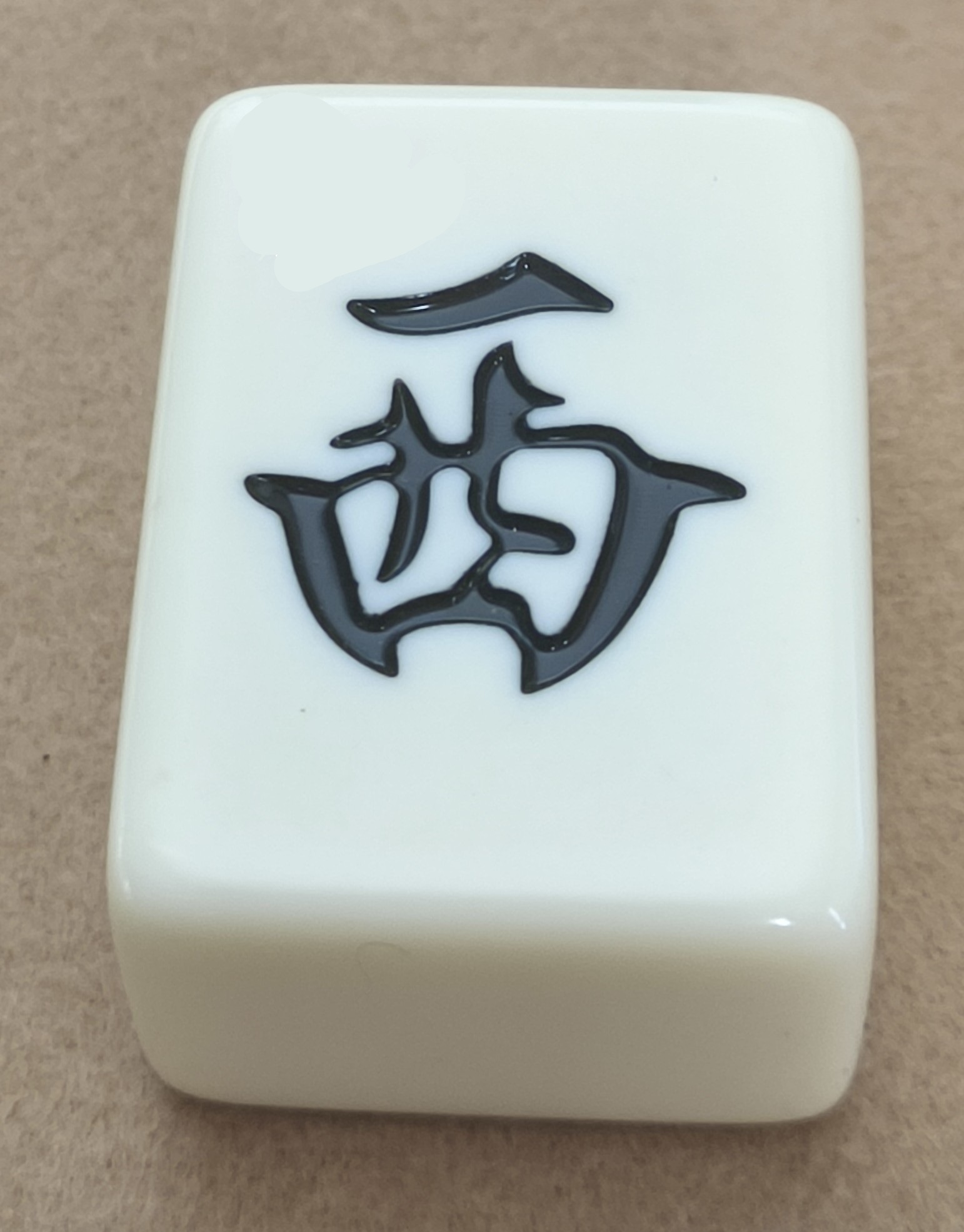
🀂 West Wind
West sits opposite East. Like all seat winds, West tiles are most valuable when your current seat matches, otherwise they’re useful primarily to block opponents or complete melds.
BONUS: Scoring if it is your seat wind or the prevailing wind
RECOGNITION: W for west. Look for a vague “W” on the tile.
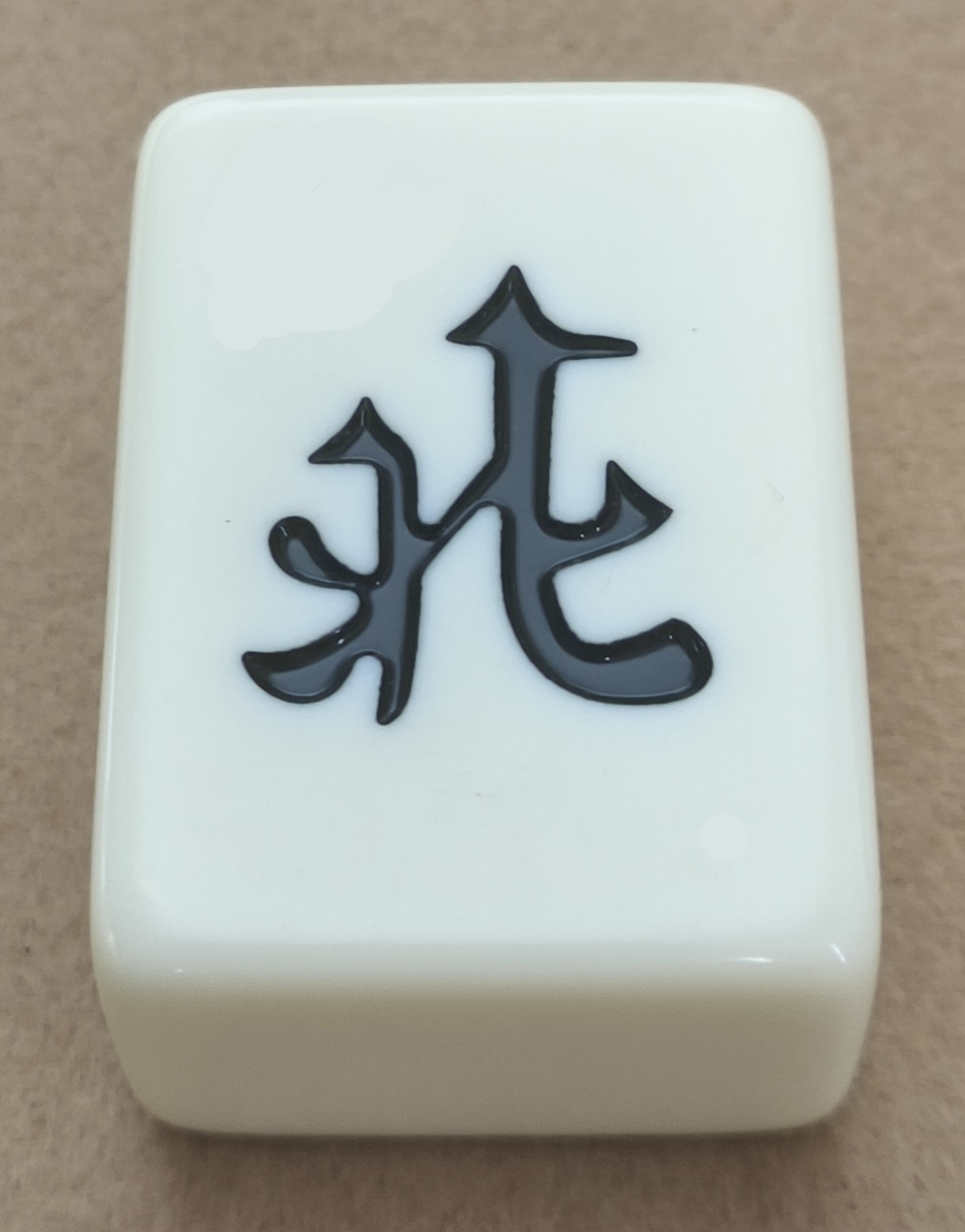
🀃 North Wind
North completes the four directions. In a full round, all players will have sat in the North position at least once.
BONUS: Scoring if it is your seat wind or the prevailing wind
RECOGNITION: n for north. Look for an “n” on the tile.
The Dragon Tiles
There are three Dragon tiles. Like Winds, you’ll have four copies of each in a full set, ie. 12 Dragon tiles total. Dragon Pungs always score points.
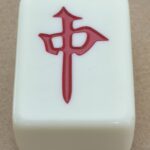
🀄 Red Dragon (中 Zhong)
The Red Dragon tile displays the character 中, meaning “center.” It’s the most visually recognizable dragon tile. A Pung of Red Dragons earns bonus points in any situation, no seat or round condition is required
BONUS: Pung always scores bonus points, irrespective of seat or round
RECOGNITION: It is a red symbol
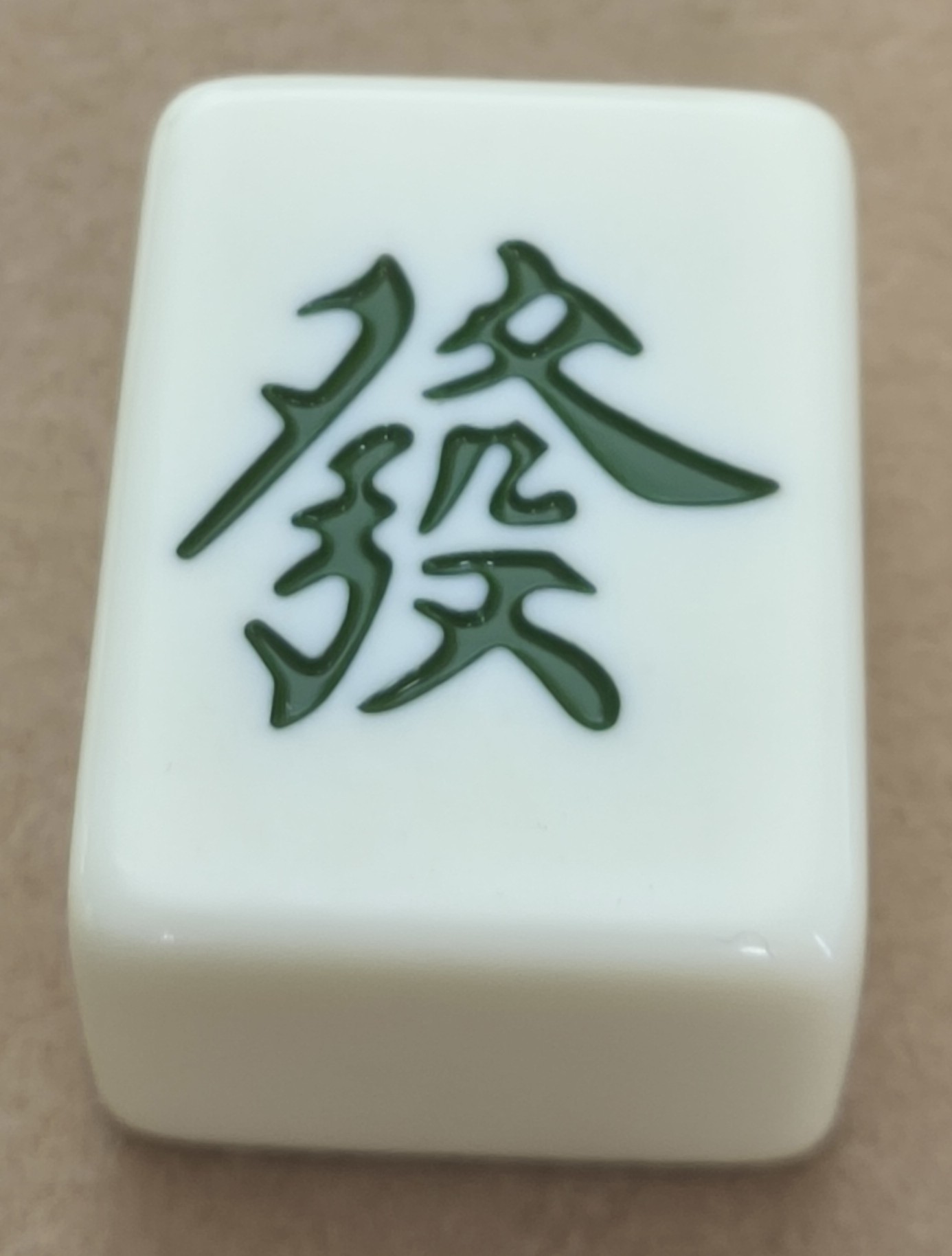
🀅 Green Dragon (發 Fa)
The Green Dragon displays 發, meaning “prosperity.” In Cantonese Mahjong culture, this tile is considered particularly auspicious.
BONUS: Pung always scores points, irrespective of seat or round
RECOGNITION: Its got a green script
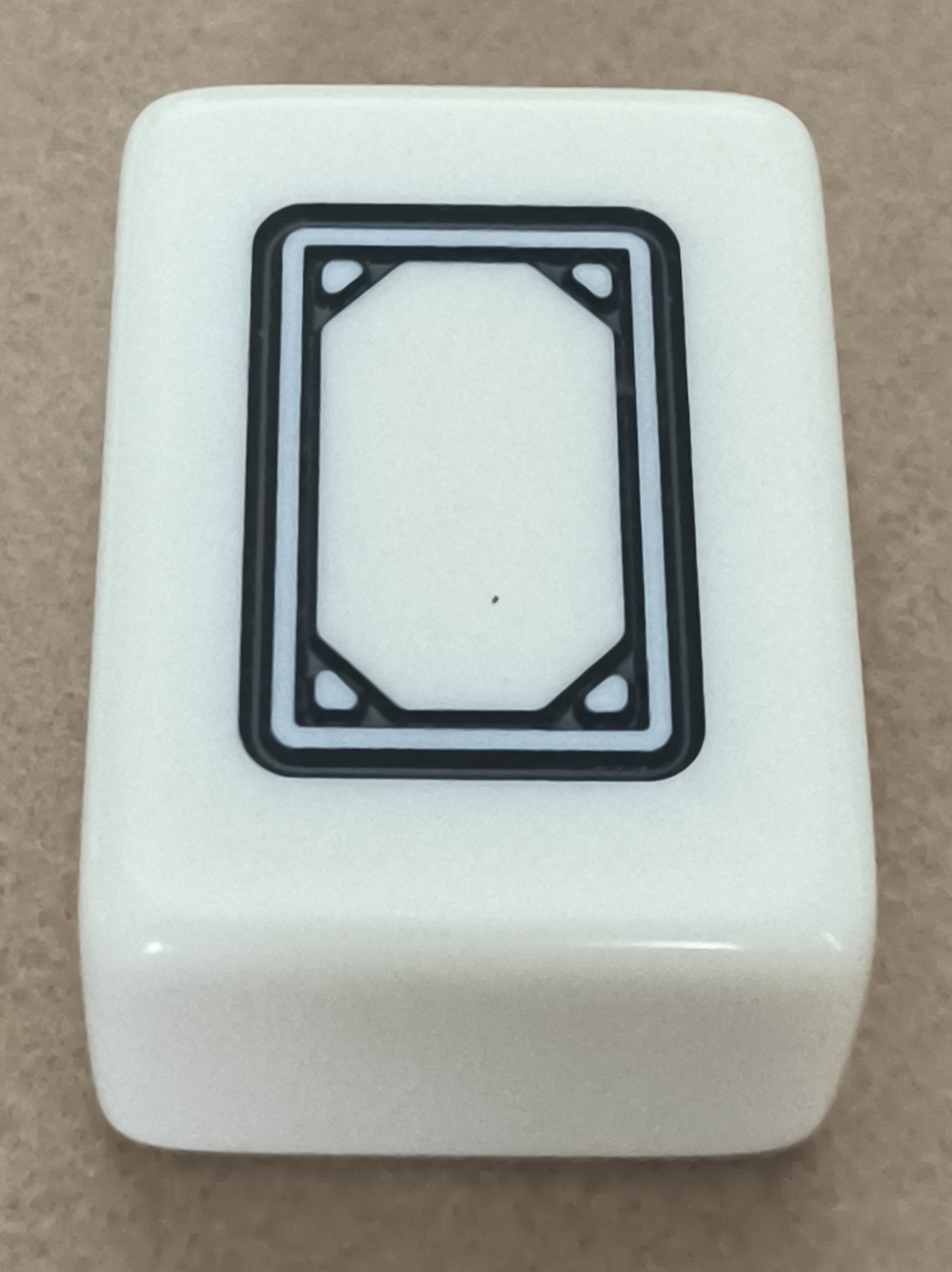
🀆 White Dragon (白 Bai)
The White Dragon, also called Soap, has a border. It displays 白, meaning “white” or “pure,”.
BONUS: Pung always scores points, irrespective of seat or round
RECOGNITION: It has got a frame to distinguish it from a blank tile
How to Use Honors Tiles in Your Hand
Honor tiles can only form Pung (3 identical) or Kong (4 identical). Winds cannot form Chow sequences there is no “East-South-West” run. This is the fundamental difference between Honors and suit tiles. However, some special hands may have option of all 4 winds (NEWS)
BEGINNER RULE OF THUMB
If you have only one or two of a Wind tile that is neither your seat wind nor the prevailing wind — discard it early. It has no sequence value and you’re unlikely to complete a Pung. Don’t hold onto dead tiles.
Dragons are different. Since they always score on a Pung regardless of conditions, they’re worth keeping if you have two of the same kind. One discard from the wall could complete it. That’s a meld plus bonus points in a single tile.
The White Dragon gets discarded carelessly by beginners because it doesn’t look like much. Experienced players know to watch for it and will claim it if they’re waiting on a Dragon Pung.
COMING UP IN LESSON 3
Now that you know all your tiles (suits and honors), Lesson 3 covers how to actually read a tile in under two seconds. It sounds trivial. It isn’t. Speed matters at the table.
Follow along on Instagram for the full visual series: each lesson drops as a carousel with tile images and examples.
Limited spots — register now.