The Mahjong Player’s Companion Explained: A Practical Guide to Western/British Mahjong
The Book That Quietly Shaped Modern Play
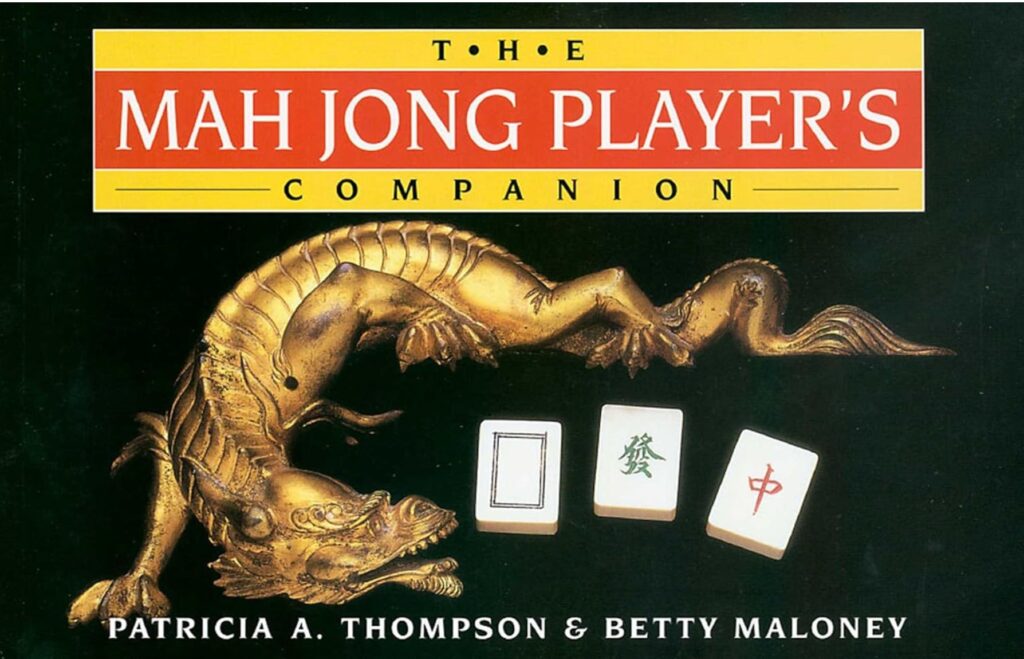
If you’ve ever played Mahjong with a book beside you, it was likely The Mahjong Player’s Companion by Patricia A Thompson and Betty Maloney.
There is a certain kind of energy when we settle down at a Mahjong table to play. We greet each other, take our seats and release the tiles into the center, and begin the familiar ritual of washing the tiles (siu pai). The rhythm builds with a soft storm of clicking and clacking that rises into a steady crescendo that signals the start of the game.
Somewhere at the table sits THE BOOK. Pages worn at the corners, ready to be consulted at the first moment of doubt. A player pauses, studies their tiles and flips through; searching for a hand that might just be there. It is this instinct that has led countless of players to Patricia A Thompson and Betty Maloney’s The Mahjong Player’s Companion.
Why The Mahjong Player’s Companion Still Matters?
For those who didn’t grow up with Mahjong traditions—no family games, no inherited table habits—this book remains a practical entry point.
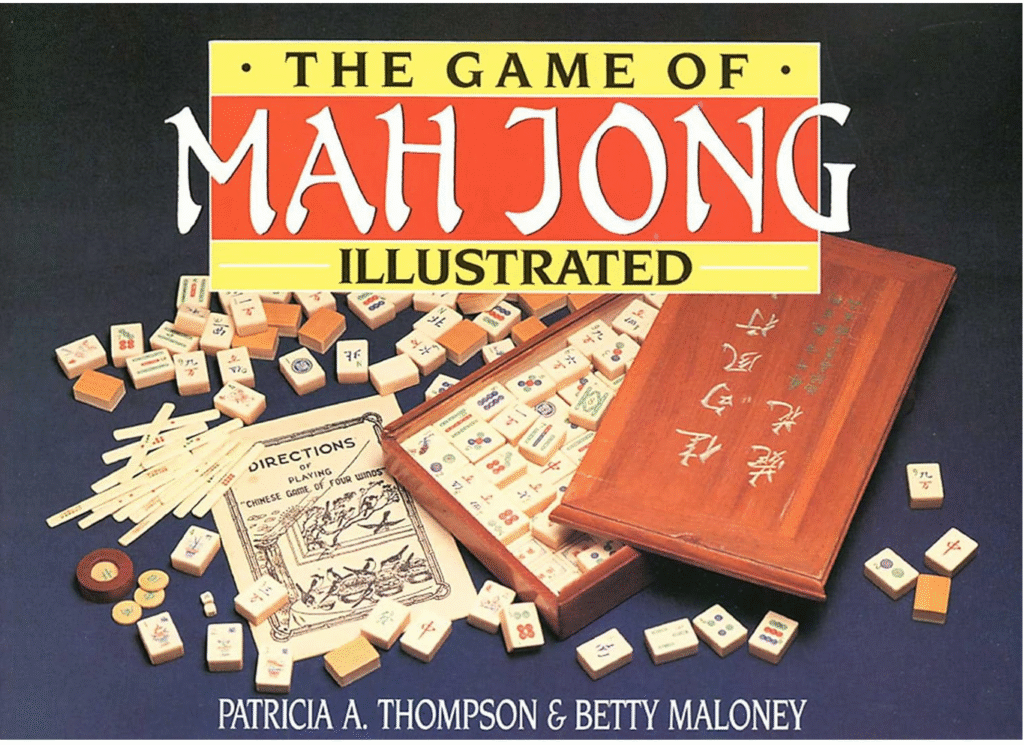
Published in 1986, Thompson and Maloney captured a living tradition and made classical Chinese Mahjong accessible to English-speaking players, rather than the American system, which relies on a new card each year.
Rather than inventing a new style, the book organizes traditional Chinese play as it came to be understood in Western circles. It explains the tiles, core gameplay, and a simplified limit-based scoring system, while offering clear guidance on special (classic) hands and how to recognize them.
Later editions were reorganized into a more streamlined, modular reference format. They retain classical foundations but focus on practical, achievable hands.
Expert Insight
💡What Makes This Book Different
The Mahjong Player’s Companion introduces special hands without the complexity of traditional scoring systems. Instead of layers of multipliers and fan counts, it uses clear patterns that new players can recognize and build. It focuses on:
– Classical Chinese-style hands presented in a structured format
– Fixed, limit-based scoring
– Named special hands that are easy to identify
– Practical, achievable patterns
– Learning through real-table play rather than calculation
It bridges tradition and accessibility, making it ideal for learners who want to focus on patterns rather than scoring mechanics.
What is Limit Scoring?
One of the key strengths of the Thompson–Maloney method is its scoring approach. Instead of relying on layers of doubles, fan counts, and multipliers, it assigns fixed values to specific hands.
Hands are categorized—for example, as a standard win, a half-limit, or a full limit—depending on the combination. Some tables also use intermediate limits (e.g., 1500 points), though this varies.
This reduces the need for ongoing calculation during play. You learn to recognize a limit hand—and play accordingly.
Some tables also refer to being one tile away from completion as “fishing,” though this terminology is not universal.
If a hand is not listed in the book, players may revert to basic scoring rules depending on their table. Overall, this approach prioritizes recognition over calculation, making it more accessible for new players.
How to Use the Thompson–Maloney Book Gracefully
A Gentle Mahjong Etiquette for Using “The Book” at the Table
One of my regular playmates, Fiza, recently attended a Mahjong fundraiser in Karachi. “They were glued to the book,” she said. “Every other move someone was flipping pages, and it took away from the sociability of the table.”
The problem is not the book but how it was being used.
Used well, it supports the game. Used poorly, it disrupts its rhythm.
Practical etiquette for using the book:
Used this way, the book becomes what it is meant to be: a quiet helper in the background, not the main character at the table.
Over time, you will rely on it less—not because the game becomes simpler, but because you become more fluent.
How This Differs from Hong Kong Mahjong
The Thompson–Maloney system and Hong Kong Mahjong approach the game differently.
- Thompson–Maloney (Western): fixed scoring, named special hands, pattern recognition
- Hong Kong: flexible hands, fan-based scoring, incremental building of value
In practice, this means the book encourages you to aim for specific, predefined hands, while Hong Kong style allows you to adapt your hand as it develops.
For beginners, the Thompson–Maloney approach can feel more structured. Hong Kong Mahjong, however, often leads to faster, more fluid gameplay once the basics are understood.
Final Thought
Whether you are learning Chinese style, Hong Kong style, or your local table’s version, think of this book as a companion, not a manual.
It is not just about rules—it is about learning how to see patterns, make decisions, and grow comfortable at the table.
You don’t need to master Mahjong quickly. You build fluency over time—tile by tile, hand by hand.
- Use it lightly
- Refer when curious
- Learn at the table
- Enjoy the pace
If you play Karachi style, this becomes even more practical. Many familiar hands appear in the book under different names, so knowing how they map can save time and confusion at the table.
Karachi Style Players: Click to Find Your Hand in the Book
If you play Karachi Style, you may have noticed that some hands go by different names at your table than they do in Thompson & Maloney. Monty’s Hand won’t appear in the index. Neither will Naila’s Hand, Khalida’s Hand, or Sind Club Hand. The table below maps the Western names from the book to the names used at Karachi tables — organised by round.
↓ Download Karachi–T&M Hand Mapping (Free PDF)| T&M Hand Name | Page | Karachi Style Name |
|---|---|---|
| KHI EAST | ||
| Apple Blossom | p19 | Apple Blossom |
| Big Robert | p14 | Pinkys |
| Dragonfly | p31 | Dragonfly |
| Hovering Angels | p17 | Chow + 5 Honors |
| The Professors | p19 | The Professors |
| Windy Chow | p18 | Windy Chows |
| Windyvane | p28 | Windyfly |
| KHI SOUTH | ||
| Crazy Chows | p16 | Crazy Chow |
| Knitting | p20 | Knitting |
| Seven Twins | p22 | Dirty Pairs (no terminals or honors) |
| Triple Knitting | p20 | Crochet |
| KHI NORTH | ||
| All Honor Hand | p44 | All Honor Hand |
| Confused Gates | p9 | Wriggly Snake v1 |
| Four Blessings | p30 | Four Blessing |
| Gates of Heaven | p9 | Wriggly Snake v2 |
| Gerties Garter | p14 | Gerties Garter |
| Green Jade | p35 | Green Jade |
| Imperial Jade | p36 | Imperial Jade |
| Lilly Pilly | p36 | Lilly Pilly |
| Numbers in Parallel | p43 | Number Pungs |
| Royal Coral | p35 | Royal Coral |
| Royal Ruby | p37 | Royal Ruby |
| Ruby Jade | p37 | Ruby Jade |
| Run, Pung, Pair | p9 | Run, Pung, Pair |
| Unique Wonder | p44 | Monty Unique Wonders (13 Orphans) |
| White Opal | p35 | Lilly of the Valley (Monty ver) |
| Wriggly Snake | p27 | 1-9 plus 5 Honors |